01◎
Do the dose.
Your clinician's plan, exactly: sets, reps, holds and rest, set to your range and your week. Tap “Today's set” and go.
JoyHab turns the exercise sheet your therapist hands you into a guided session. Your camera counts every rep, watches your form, and gives you a report for your clinician, so the work you do at home finally counts.

Recognition2026 Insight to Innovation Recognition Award from the Medical Device Development Centre (MDDC).
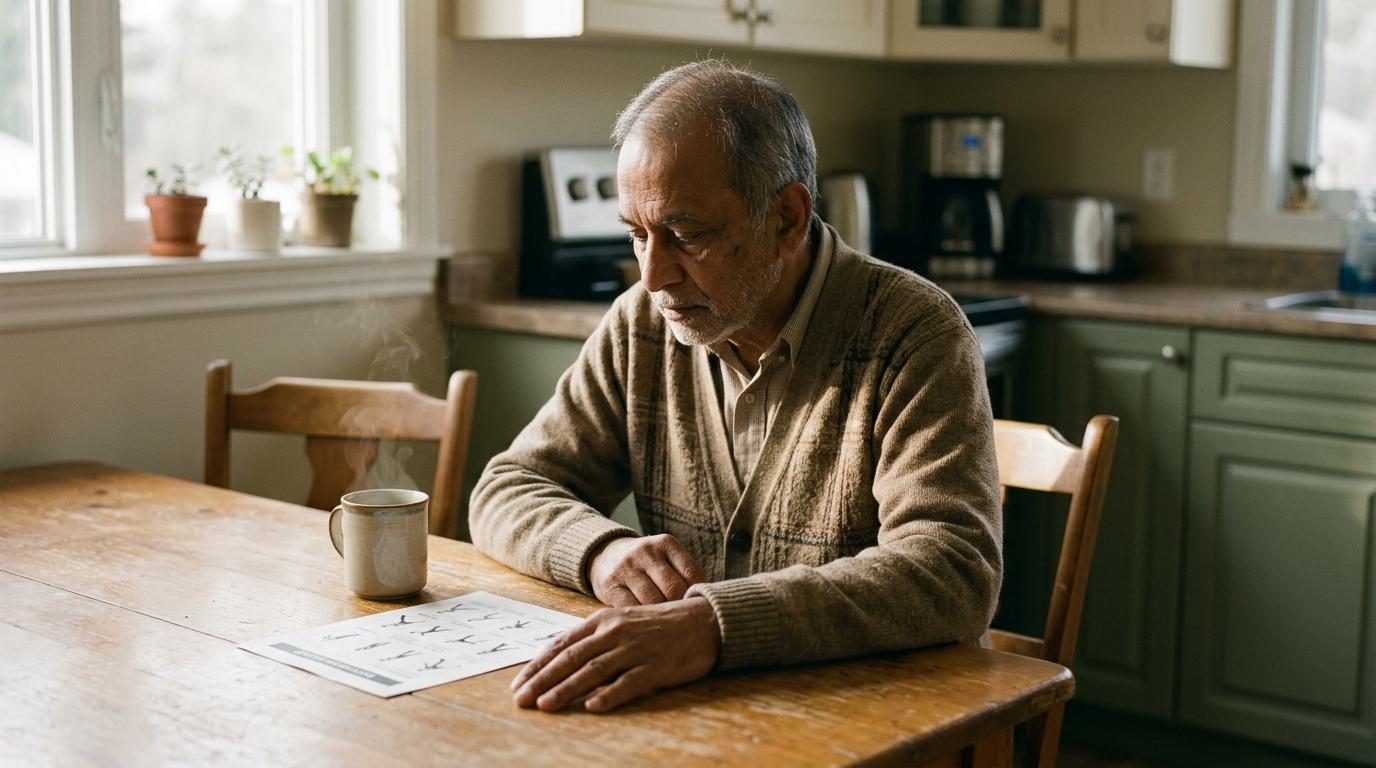
Home from hospital. A sheet of paper, and a cup of tea.
I'm a…
One story for everyone below. Or step straight through your own door.
Patients & families
What a session feels like, and how it helps at home.
Enter →
Clinicians
Prescribe in a minute. See what happened between visits.
Enter →
Clinics & health systems
Home-program measurement that fits how outpatient rehab runs.
Enter →
Research & industry
Movement, measured at home, as data you can use.
Enter →
Investors & partners
The thesis, the moat and the roadmap.
Enter →
A clinician prescribes exercises. You go away and do them. They see how it went, and adjust. Then round again. That cycle only works if the clinician can find out what actually happened.
In hospital, a therapist is in the room. But the stay is short, and roughly three quarters of stroke survivors go home. From there, most of the work is up to them. Nobody counts the reps, nobody catches the bad form, and weeks later the only record is memory.
The next prescription is written on a guess.
…and nothing comes back.
The gap · 100 stroke survivors
In hospital, every person is watched.
A therapist in the room, counting, correcting.
*Share of stroke patients discharged home from acute care, Southeastern Ontario, 2017/18. Illustrative of one region; the gap it shows is everywhere.
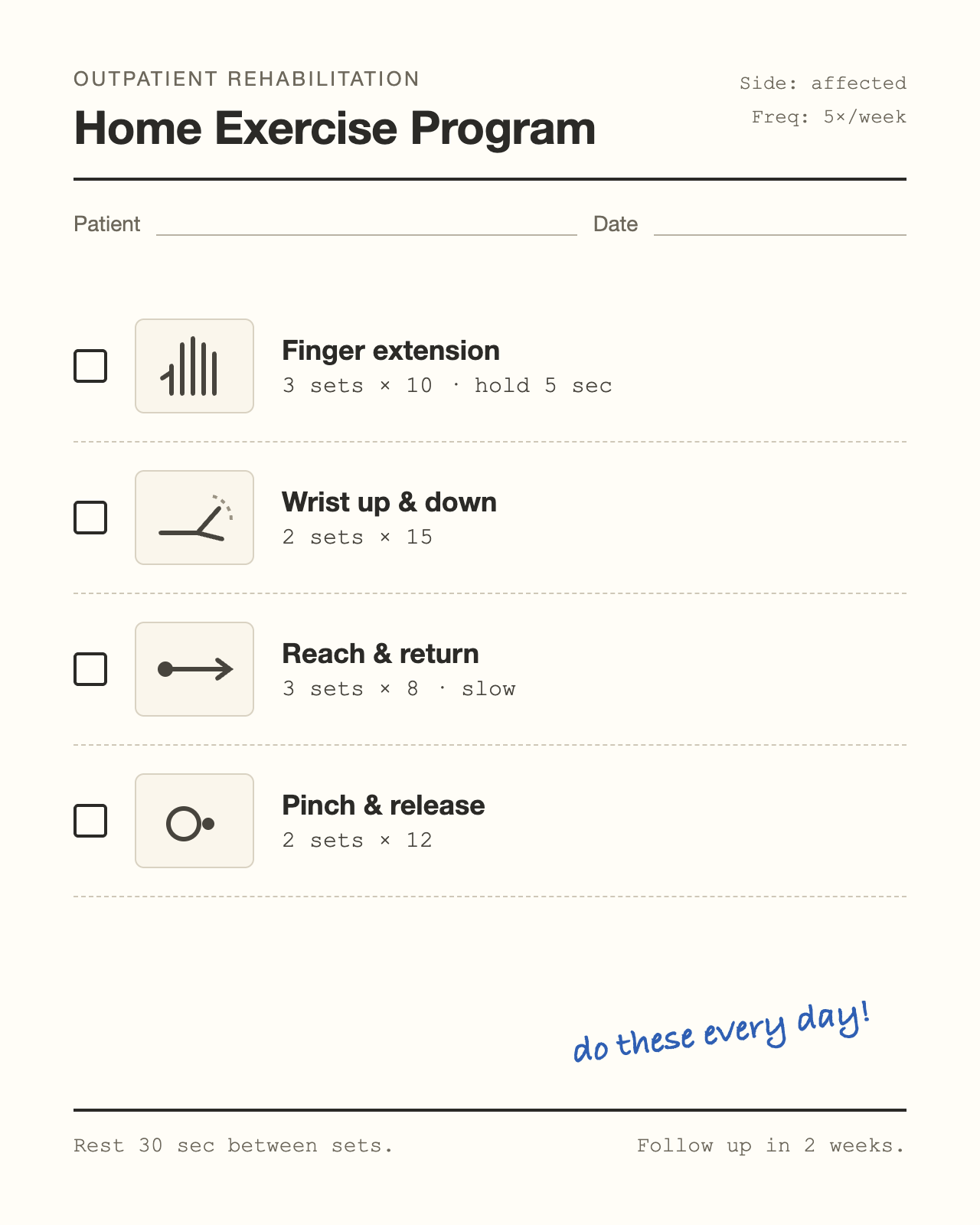 Loading interactive paper.
So we threw out the paper
JoyHab is the missing piece.
Anything on a paper that needs to be measured and reported back.
Practice is how the nervous system relearns movement. Each repetition sends the message again, brain to hand.
Reps
Getting movement back takes repetitions. A great many of them, over months.
Form
Practise a movement badly and you train a compensation. Practised for months, it becomes permanent.
Time
The months right after a stroke or brain injury are when the brain is most able to rewire. The clock is running.
Learning moment · keep scrolling
rep 1
The pathways you practise get stronger and faster. Illustrative, not a measurement, but it's the reason the reps matter, and why the form you practise is the form you keep.
Learning moment · try to cheat
Last reps
Compensation learned
0%
Nobody's watching, so every hike counts as a rep, and the body learns it.
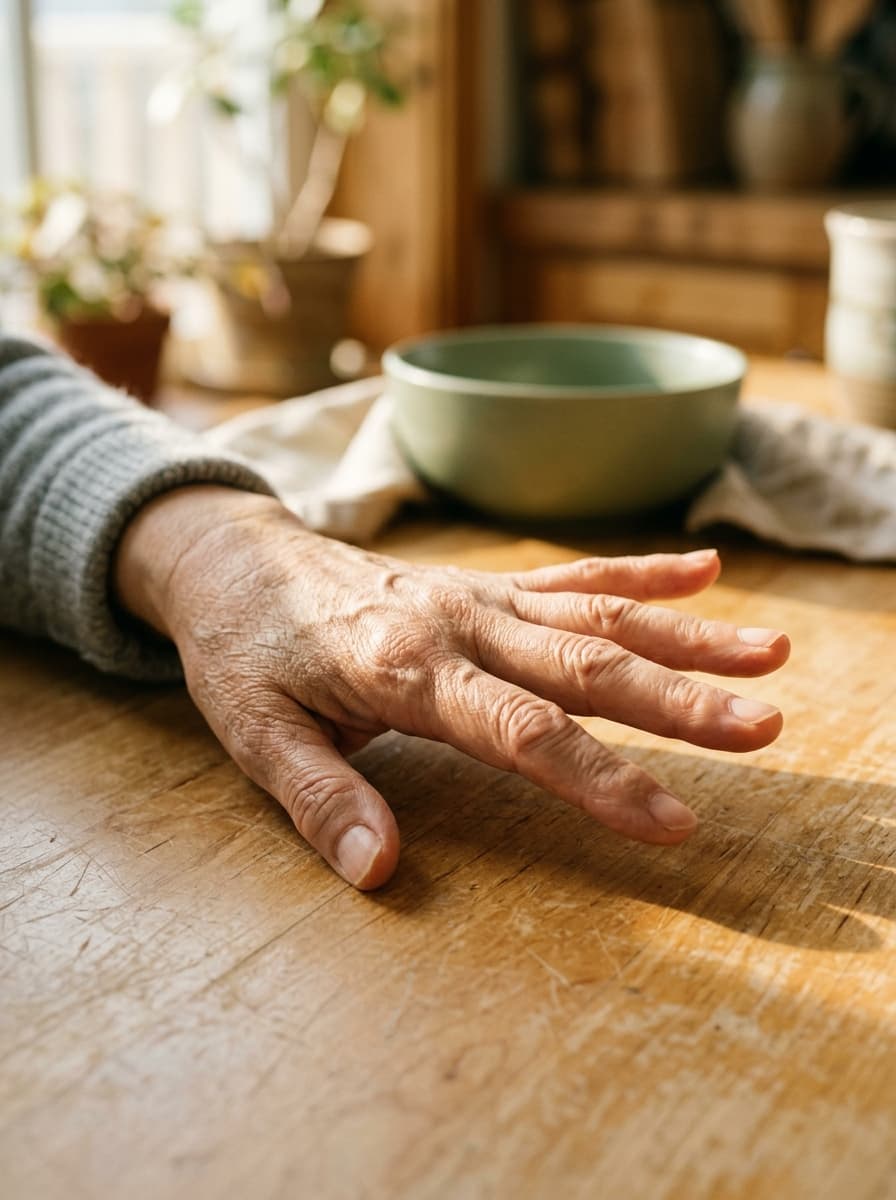
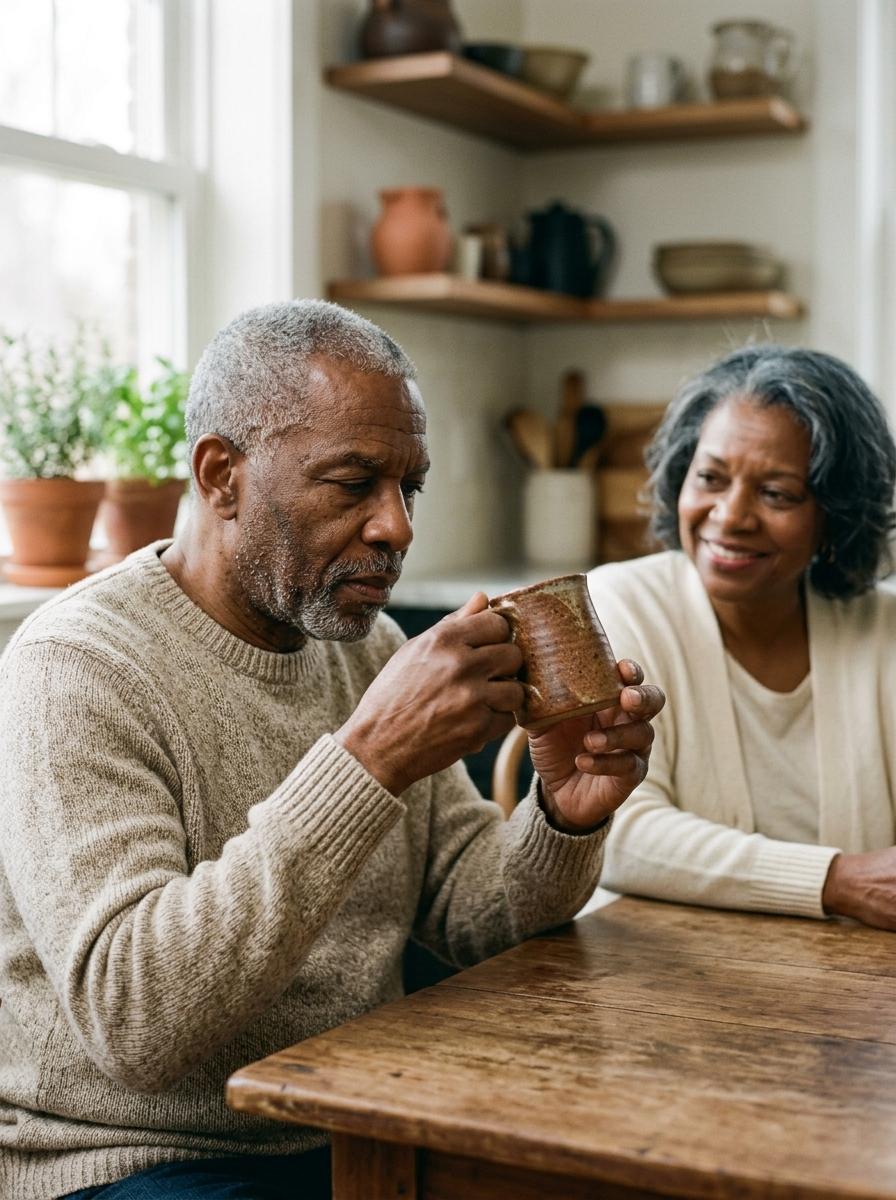
The cycle completes.
It takes the clinician's prescription and turns it into an experience you actually engage with at home, using the camera already in your laptop. It keeps you going, watches the movement, the form and whether each rep was real, then gives you a report you bring back.
Week by week, a snapshot becomes a picture, and the next prescription is written on evidence.
The clinician stops asking how it went, and starts seeing it.
Your clinician's plan, exactly: sets, reps, holds and rest, set to your range and your week. Tap “Today's set” and go.
Leaning to cheat? Shoulder hiking? JoyHab checks your form against rules your clinician sets, tells you kindly, and only counts the reps that meet them.
Live coaching on screen, a target to reach for, and your own personal best racing beside you as a ghost.
Every session turns into a clear report you bring back to your care team at the next visit.
The loop that should have always existed between the clinic and your living room.
They pick your movements, your dose and what to watch for. JoyHab turns it into a plan code you paste into the app once.
Plan code · illustrationEnter the code once. Every day after that it's one big button: Today's set. Your laptop camera does the counting and the coaching.
Today's set · 12 minBring your report to your next visit. They see exactly what you did and how close you got, and adjust the plan from there.
Report · last 28 days
A few minutes at the kitchen table. Counted, coached, and seen.
A JoyHab plan is a real prescription, not a vague “do your exercises.” Every number your clinician sets is the number JoyHab holds you to, kindly, rep after rep.
Targets are set to your range, measured on day one, so a stiff hand and a nearly recovered one both have something real to reach for.
Some people do their best work being coached: watching their own hand, being corrected. Others do their best work when they've forgotten they're exercising at all.
Now open slowly.
Watching your own hand, corrected as you go.
Open your hand to reach the bubbles.
Forget you're exercising. The reps still count.
Same prescription · same movement · same measurement
Nobody can tell you in advance which one you are. JoyHab records both, so you and your clinician can compare.
Rehab only works if you keep showing up. So we made the reps feel less like a chore and more like a win.
Wake the Hand, Pinch Circuit, Homecoming · Day One and more: short, coached and ready to go.
Ball → Bucket. Pick & Place. Pinch it, carry it, let it go, just like the kitchen counter.
The same targets, dressed as a game. Your reps still count; it just stops feeling like homework.
Your personal best races beside you. The only person you're competing with is last week's you.
Prefer it quiet? One switch turns off the confetti and animation. Same coaching, less noise.
Flag the exact rep that didn't feel right. Your care team sees it in your report.
No guilt, no broken streaks, no shaming. Missed attempts count as effort, and goals ease off after a tough patch.
Hab comes from the Latin habilis: able. Rehab means able again. Our mark is a range-of-motion reading. The green is the range you've won back. The gold point is the target your clinician set. Every session, the gap gets smaller.
See yourself getting better.
Raise your hand. Watch the mark move.
Runs entirely in your browser. Your video is never shown, saved or sent anywhere; you'll only see points of light.
// live range
Demo: wrist angle from the camera, the same tracking JoyHab uses at home.
An ordinary webcam, a pose model that runs entirely on your device, and a rules engine your clinician configures. No wearables, no special hardware, nothing sent to a server to be watched.
Camera
Any laptop or desktop webcam, right in the browser.
Pose model
21 hand points and 33 body points, computed on your device.
Smoothing
A 1€ filter takes out the jitter without adding lag.
Form rules
Trunk lean, elbow, shoulder, wrist, with thresholds your clinician owns.
Rep scoring
Range, smoothness, time-to-peak, and distance from your target.
Report
Built on your device. Printable. Yours to share.

Never alone. Your practice, ready for your next visit.
Every session becomes a one-page report: how much you practised, how close you got to your target, which reps your form slipped on, and how you said you felt. Not pass or fail. Distance from target, and whether it's closing.
Care-team report
Last 28 days · sample data
Distance from target · finger extension
For clinics
Prescribe in a couple of minutes from simple menus. Your exact words are kept word for word. Get objective, session-by-session data back instead of “I did them, mostly.” Built to fit how outpatient rehab really runs.
Private by design
Video never leaves your device.
The tracking runs right in your browser. It works with dots on your joints, never your face or your home.
You carry your report.
It's built on your own device. You decide who sees it: print it, save it, bring it to your visit.
Nothing to install.
Open it in Chrome on a laptop or desktop and you're ready. No special hardware, no wearables.
your camera, on your device
What JoyHab actually keeps.
Scroll, or hover the frame. The camera image is read on your own device and turned into a handful of points on your joints. The points are measured. The picture is never saved and never sent.

If you're doing rehab
Clear targets, kind coaching, and proof of your progress you can actually see.

If you're helping someone
JoyHab does the counting and the reminding of form, so you can just be there for them.

If you're a clinician
Objective data on dose, form and progress, without adding hours to your week.
“A handout piece of paper with exercises on it. It's up to me to follow through with it, and make sure that I'm following the form.”
Tristan Cezair, founder, on his own home program
So he built the thing he needed.
JoyHab was designed and built by a patient, much of it from a hospital bed, during his own recovery. He is its first user and its toughest critic. Every feature exists because he needed it on a hard day: the targets, the form checks, the kindness, the report his care team could actually read.
He came to it with the three skills it needed: years of making immersive films people want to stay inside, recognized with a Canadian Screen Award; a granted US patent on capturing a real person's movement to animate a lifelike avatar; and a career building software. JoyHab is that work, turned toward recovery.
Anyone can point a camera at a hand. JoyHab was shaped by people who had no obligation to help, and did anyway. That took months of relationships, and it can't be rebuilt in a weekend.
running an inpatient stroke rehabilitation unit: prescribing authority, and what a clinician needs to see
the clinical reasoning and movement vocabulary the system speaks
feedback, timing, and where a sensory channel helps
and its discovery lab: students and instruments
who used it harder than anyone had
building the clinical evidence base for a full academic year
how play is made engaging, and safe, in a clinical tool
where a comparison study is planned for later
What's in place, what's underway, and what's still an open question. Tap any card to go deeper.
From one patient's need to its first measurement study. Every step is about one thing: earning the right to say more than measures.
During the founder's own recovery, around the gap he was living.
Physiatry, physiotherapy, motor control and neurotechnology, in the room from the start.
In the browser, with tracking that runs on your own device, and records a row of data for every single attempt. Streams alongside EEG and EMG for laboratory research.
Filed in Canada, October 2026.
2026 Insight to Innovation Recognition Award, Medical Device Development Centre.
A master's physiotherapy cohort building the clinical evidence base through the 2026–27 academic year.
Now being planned. A comparison against a gold-standard robotic assessment comes later. No study is running yet.
The groundwork to bring JoyHab into clinics as a recognised clinical tool.
Shoulder, lower body and whole-body programmes, on the same engine.
Patients, families and clinics, in the order they joined the waitlist.
measures.
JoyHab measures. It has not yet been tested for recovery, and we make no claim that it improves anything. Its known limitations are written down and kept current. The honest verb is measures, and everything after that has to be earned.
Your door into JoyHab.
Patients & families
What a session feels like, and how it helps at home.
Enter →
Clinicians
Prescribe in a minute. See what happened between visits.
Enter →
Clinics & health systems
Home-program measurement that fits how outpatient rehab runs.
Enter →
Research & industry
Movement, measured at home, as data you can use.
Enter →
Investors & partners
The thesis, the moat and the roadmap.
Enter →
JoyHab is opening to people in waves. Save your spot and we'll tell you the moment it's your turn.
That's what a plan code looks like. Yours comes from your care team.
No. A laptop or desktop with a webcam and the Chrome browser is all it takes. Tablets work too; phones are a bit cramped for now.
Never. JoyHab works for your care team, not instead of them. Your clinician sets the plan, and JoyHab helps you follow it and gives you a report to bring to the next visit.
No. The camera tracking runs on your own device. JoyHab works with points on your joints, never with video of you or your home.
Today: hand, finger, wrist and arm programs. Shoulder, lower body and whole-body programs are on the way.
JoyHab is in development and opening in waves. Join the waitlist and you'll hear from us first.
Yes, please. Pick “I'm a clinician” when you join and we'll be in touch about early access.
JoyHab is a research prototype, not yet available to patients. It measures and records movement during prescribed exercise, and coaches practice. It does not diagnose, treat, or change a prescription. Always follow your clinician's advice.